
Real Estate Listing Media Checklist for Remote Buyers
Use this checklist for photos, floor plans, tours, current video, location context, maps, documents and calls to action on a property listing.

A complete real-estate listing media set should answer separate questions about current appearance, interior layout, exterior condition, location context, access, surrounding places, documents, and the next action. No single asset answers them all. Use photography, floor plans, tours or current video where appropriate, then add an interactive flyover when spatial location relationships are important to a remote buyer.
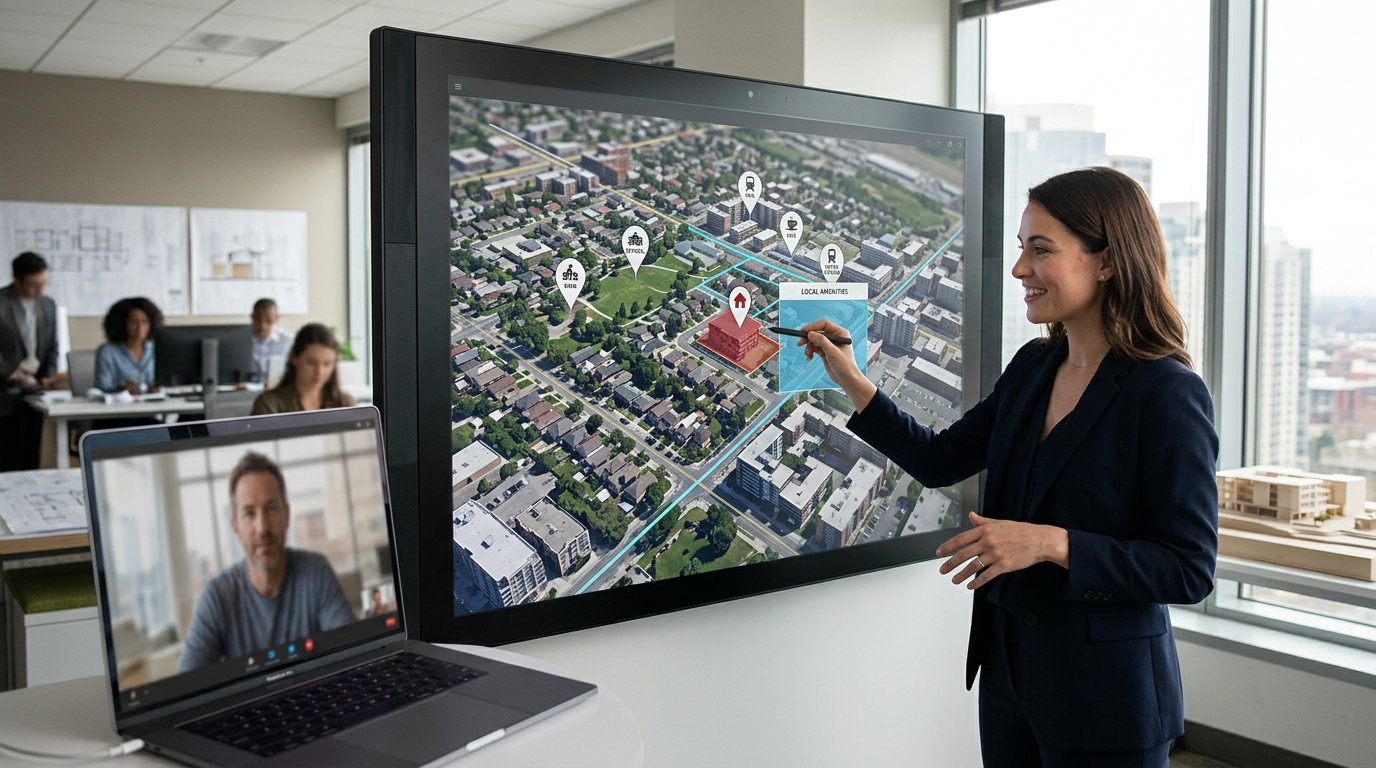
Questions the listing must answer
Evaluating a property from a distance presents a significant challenge for out-of-state and international buyers who cannot attend an in-person open house. To make an informed decision, these buyers require a comprehensive digital representation that systematically answers separate questions about the property. A standard photo gallery, while useful, is insufficient on its own because it cannot convey how spaces connect physically or how the property relates to its broader geographic environment.
A complete real-estate listing media set must address distinct categories of inquiry: the current physical appearance of the structures, the flow and dimensions of the interior layout, the exterior terrain, and the surrounding location context. When these elements are presented as a structured, multi-layered information package, remote buyers can conduct initial due diligence with greater clarity. Providing this level of detail helps establish an honest baseline of information, allowing buyers to determine if a property fits their specific requirements before proceeding to formal physical inspections.
Current visual evidence
High-resolution professional photography is the primary tool for demonstrating the current physical appearance of a property. These images must cover both interior and exterior spaces under clear lighting to give an accurate representation of finishes, materials, and visible wear. For remote buyers, who cannot physically touch or inspect surfaces, detailed photos of secondary spaces like utility rooms, hallways, and storage areas are essential for establishing trust and showing the actual state of the home.
While static photos highlight specific features, a continuous, unedited video walkthrough provides an additional layer of verification. This type of video establishes a clear record of the property's physical state on a specific date, showing how spaces connect without strategic edits or staging. This unedited evidence helps reassure remote buyers that the visual representation is honest and complete, serving as an important step in building confidence from afar.

Interior and layout
Understanding the spatial relationship between rooms is a common hurdle for remote buyers. Although individual photos show the aesthetic details of a room, they do not convey how the interior spaces connect. To address this, a detailed 2D floor plan with accurate room dimensions and wall placements is a critical component of the listing media set. It allows buyers to plan furniture layouts, understand the flow of daily life, and evaluate the functional utility of the space.
Interactive virtual tours complement floor plans by allowing buyers to navigate through the interior at their own pace. Using web-based viewers, remote buyers can simulate an in-person walkthrough, examining floor-to-ceiling transitions and the proximity of bedrooms to common areas. Combining a static floor plan with an interactive virtual tour provides a comprehensive interior profile that answers most layout-related questions.
Location and access
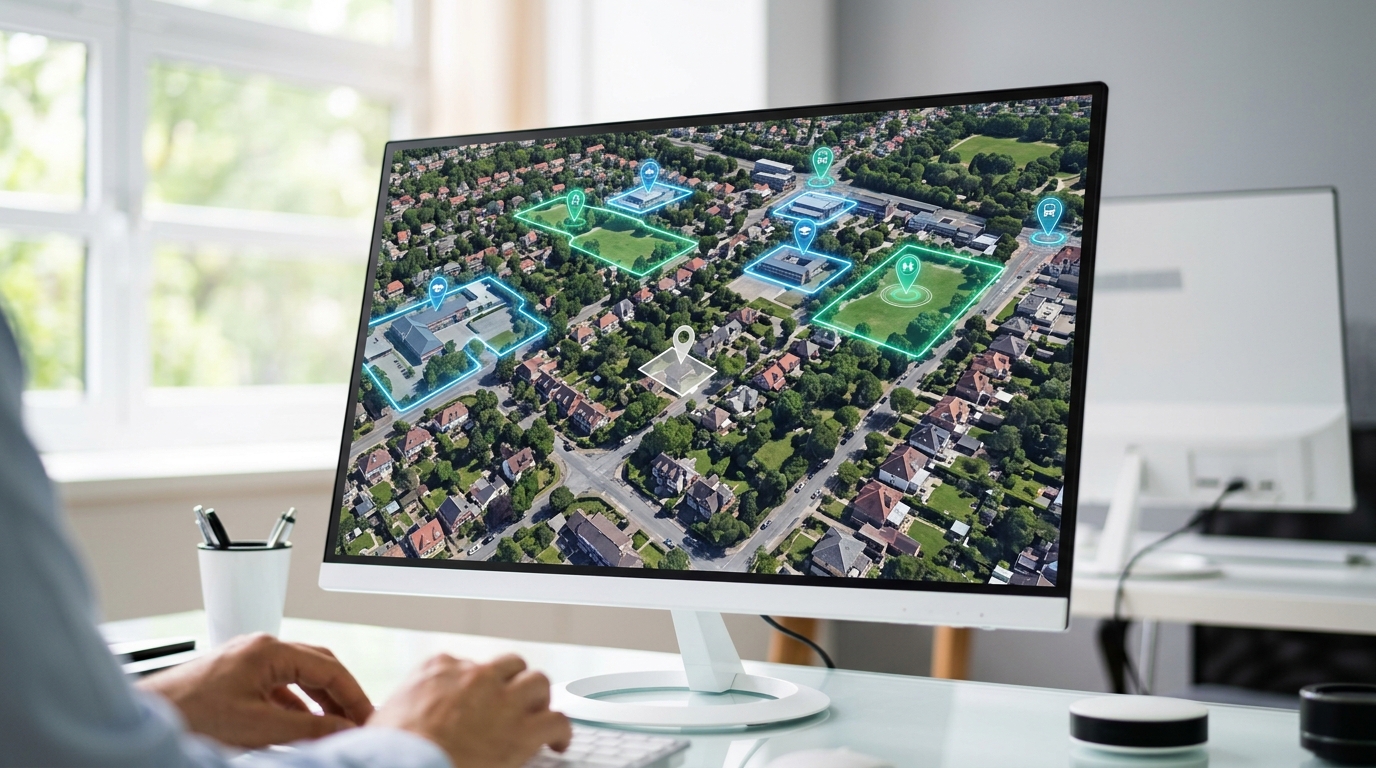
A property's relationship to its surrounding neighborhood, local infrastructure, and terrain is highly important to remote buyers, yet it is often the most difficult context to communicate. Traditional static maps with simple pins do not show the three-dimensional reality of the terrain or how a property sits relative to neighboring structures, parks, and local amenities. Buyers need to understand this external context to evaluate the overall appeal of the location.
To convey this spatial context, real estate professionals can utilize interactive 3D location stories. Using tools like Georivo, which turns a property address and nearby places into an embeddable interactive photorealistic 3D location story using licensed geospatial imagery, marketers can highlight spatial relationships. This visualization supports prepare the automatic location presentation—such as complete property page, location context, and arrival-context presentations—and allows live exploration after playback. This interactive experience must be clearly distinguished from physical drone footage, which is a recorded video captured by a physical camera on an unmanned aerial vehicle, whereas 3D geospatial stories are interactive digital models constructed from licensed geospatial data.
Documents and disclosures
Visual media must always be supported by administrative and legal documentation to facilitate a complete evaluation. Remote buyers require early access to essential paperwork, including property disclosures, homeowners association (HOA) rules, past utility records, and tax histories. Providing these documents alongside visual assets ensures that buyers can review the financial and legal aspects of the property early in the process.
Organizing these documents into a secure, easily accessible format allows buyers to consult with legal and financial advisors efficiently. When disclosures and reports are presented transparently alongside high-quality visual media, it reduces uncertainty and helps ensure that any subsequent offers are based on a complete understanding of both the physical property and its legal standing.
Media checklist
To ensure that no critical information is omitted, property marketers and real estate agents should utilize a structured media checklist. This checklist acts as a quality control tool, ensuring that every listing contains a balanced mix of current visual evidence, layout details, location context, and legal documentation. By systematically verifying each asset, professionals can build a cohesive digital package that addresses the diverse questions of remote buyers.
The following table outlines the essential media assets required for a comprehensive remote-buyer listing. It defines the primary purpose of each asset, the specific value it delivers to an out-of-state or remote buyer, and the recommended format for integration. Using this structured framework helps maintain consistency across listings and ensures that all necessary spatial and physical details are clearly communicated.
Limitations and handoff
While advanced digital media, interactive virtual tours, and 3D geospatial visualizations provide invaluable context, they have clear operational boundaries. A 3D flyover or digital representation is an educational tool, not a legal or physical substitute for professional due diligence. Photorealistic 3D imagery relies on licensed geospatial data which may not capture real-time physical changes, recent renovations, temporary road closures, or current local weather conditions. It is the responsibility of both the listing agent and the buyer to verify the current physical state of the property.
Before finalizing any transaction, remote buyers must engage local professionals to perform physical inspections. A licensed home inspector must physically walk the property to evaluate structural integrity, plumbing, electrical systems, and roofing. Furthermore, legal boundaries, easements, and zoning compliance must be verified through official municipal records and professional land surveys rather than digital maps or visual tools. Digital media serves to narrow the search and build initial confidence, but the final handoff always requires physical verification.
| Media Type | Primary Purpose | Remote Buyer Value | Recommended Format |
|---|---|---|---|
| Professional Photos | Show current physical appearance | Provides visual evidence of finishes and wear | High-resolution digital files |
| 2D Floor Plans | Illustrate interior layout and dimensions | Shows spatial flow and room connections | PDF or digital image |
| Interactive 3D Flyover | Provide neighborhood and location context | Shows spatial relationships and surrounding places | Embeddable Georivo link |
| Virtual Tour | Allow self-guided interior walkthroughs | Simulates moving through interior spaces | Interactive WebGL embed |
| Document Package | Disclose legal and financial details | Provides verified administrative data | Secured PDF download |
Step-by-Step Media Integration for Remote Listings
- Gather high-resolution interior and exterior photographs showing current physical condition.
- Obtain a detailed 2D floor plan with room dimensions to illustrate interior flow.
- Record a continuous video walkthrough to establish the physical state on a specific date.
- Generate an interactive 3D location story using Georivo to show surrounding spatial context.
- Compile official property disclosures, HOA rules, and tax documents into a secure folder.
- Embed interactive assets and document links directly onto the domain-bound listing page.
Remote buyers require a multi-layered media strategy that separates interior layout, current physical condition, and surrounding geographic context into clear, distinct assets.
FAQ
Why is neighborhood context so important for remote buyers?
Remote buyers cannot easily explore the surrounding area themselves. Showing spatial relationships to schools, parks, shopping centers, and transit options helps them understand the daily lifestyle and convenience of the location, reducing the uncertainty of buying in an unfamiliar area.
How does a 3D geospatial flyover differ from a physical drone video?
Physical drone videos are recorded video files captured by a physical camera on an unmanned aerial vehicle. A 3D geospatial flyover uses licensed imagery to create an interactive experience where buyers can explore the surroundings live after the programmed camera path finishes.
Should I include unedited video alongside professional photos?
Yes. While professional photos highlight the property's best features, a continuous, unedited video walk-through builds trust by showing the raw, current condition of the home without strategic staging or editing on a specific date.
What documents are most critical for out-of-state home buyers?
Out-of-state buyers need seller disclosures, homeowners association (HOA) covenants, recent property tax bills, utility averages, and any local environmental reports. Having these readily accessible prevents delays in the offer process.
Can I embed interactive 3D location stories directly into my website?
Yes, tools like Georivo allow you to generate domain-bound embeds or protected share links that integrate into your property listing pages, keeping buyers engaged on your website.
How do remote buyers verify the structural integrity of a property?
Digital media is used to narrow down choices and build confidence, but remote buyers must always hire a licensed local home inspector to physically evaluate the structure, mechanical systems, and overall safety before closing.